
Artificial Intelligence (AI) has become an integral part of our daily lives, seamlessly enhancing various aspects from personal assistants like Siri and Alexa to sophisticated data analysis in business environments. Understanding AI requires a comprehensive look at its different categories and their real-world applications. This guide aims to demystify AI by exploring its types and the diverse ways in which they are utilized.
Categories of AI
1. Narrow AI
Narrow AI, or Weak AI, is designed and trained for a specific task. Unlike general human intelligence, narrow AI is limited to its predefined functions. Examples include voice assistants, recommendation algorithms, and image recognition systems.
Applications:
- Virtual Assistants: Siri, Alexa, and Google Assistant utilize narrow AI to perform tasks such as setting alarms, playing music, or providing weather updates.
- Recommendation Systems: Platforms like Netflix and Amazon use AI to analyze user behavior and suggest content or products.
- Image Recognition: Applications such as Google Photos categorize images by identifying elements within them.
2. General AI
General AI, or Strong AI, refers to systems with generalized human cognitive abilities. When faced with an unfamiliar task, a strong AI system can find a solution without human intervention. This level of AI, comparable to human mental capabilities, remains mostly theoretical and is a significant research focus.
Applications:
- Theoretical Research: As of now, general AI is a concept explored in research labs. The goal is to develop systems that can perform any cognitive task as efficiently as humans.
3. Superintelligent AI
Superintelligent AI surpasses human intelligence across all fields, from creativity to scientific reasoning. This form of AI is purely speculative and raises various ethical and existential questions.
Concerns:
- Ethical Implications: The potential for a superintelligent AI raises discussions about control, safety, and the future of humanity.
- Existential Risks: Scenarios of superintelligent AI overtaking human roles in life and governance present philosophical and practical dilemmas.
Types of AI Based on Capabilities
1. Reactive Machines
Reactive machines are the most basic form of AI, capable of perceiving the world and acting on what they see. They do not have memory-based functionality, so they can’t use past experiences to inform future decisions.
Example:
- Deep Blue: IBM’s chess-playing computer that defeated world champion Garry Kasparov in 1997. It analyzed possible moves, but had no memory of past games.
2. Limited Memory
Limited memory AI uses historical data to make decisions. This type requires an ability to recall past experiences to make informed predictions, essential in many modern applications.
Example:
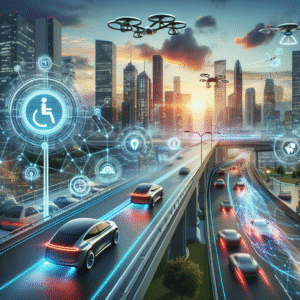
- Self-driving Cars: These rely on a combination of sensors and data to navigate, learning from past trips to improve future performance.
3. Theory of Mind
AI with a theory of mind can understand emotions, beliefs, and intentions, and interact socially. This is an area of ongoing research aiming to integrate understanding into AI systems.
Applications:
- Human-AI Interaction Enhancements: Future developments might enable more natural interactions with digital companions or customer service bots.
4. Self-aware AI
Self-aware AI possesses consciousness, understanding its own existence. This AI category is speculative and involves deep philosophical questions about consciousness and identity.
Speculation:
- Philosophical and Ethical Debates: The potential emergence of self-aware AI would lead to discussions on rights and ethics within human society.
Practical Uses of AI Across Industries
1. Healthcare
AI enhances diagnostics, treatment planning, and patient care with unprecedented precision.
Applications:
- Diagnosis: AI algorithms analyze medical data to provide accurate diagnoses. IBM’s Watson is an example, assisting in treatment plans.
- Personalized Medicine: Tailoring treatments based on individual genetic information and historical data.
2. Finance
AI fosters improvements in fraud detection, trading, and customer service within the financial sector.
Applications:
- Fraud Detection: AI systems analyze patterns to detect anomalies and fraudulent activities.
- Algorithmic Trading: Using historical data to forecast stock price trends and execute trades.
3. Manufacturing
AI optimizes production processes, improves quality control, and ensures worker safety.
Applications:
- Predictive Maintenance: AI predicts equipment failures before they occur, reducing downtime.
- Quality Control: Automated inspection systems maintain high standards in production.
4. Retail
The retail industry benefits from AI in inventory management, personalized marketing, and customer experience enhancement.
Applications:
- Inventory Management: AI forecasts demand to stock the right quantity of products.
- Customer Insights: AI analyzes shopping patterns to deliver personalized marketing messages.
5. Transportation
AI enables smarter routing, improved logistics, and enhanced safety features in transport.
Applications:
- Smart Routing Systems: AI optimizes delivery routes for efficiency and cost-effectiveness.
- Safety Features: AI-driven systems in cars assist with lane-keeping and emergency braking.
6. Education
AI offers innovative solutions in personalized learning, automation of administrative tasks, and student assistance.
Applications:
- Personalized Learning: Adapting content to meet individual learning paces and styles.
- Automated Grading: AI systems efficiently handle grading, allowing teachers to focus on instruction.
Challenges and Future Prospects
As AI continues to evolve, it presents challenges such as data privacy concerns, job displacement, and ethical considerations about decision-making. Addressing these issues involves a balance of technological progress, regulatory frameworks, and societal values.
Future Outlook:
- Integrating Ethics: Developing ethical AI systems that align with human values.
- Lifelong Learning: Creating AI systems that continuously learn and adapt to changing environments and requirements.
Understanding AI and its various facets illuminates its potential to transform industries and impact society profoundly. From narrow AI applications streamlining daily tasks to theoretical pursuits of general and superintelligent AI, the field holds immense promise and challenges. Through careful stewardship, AI can complement human efforts and drive innovation in the coming decades.