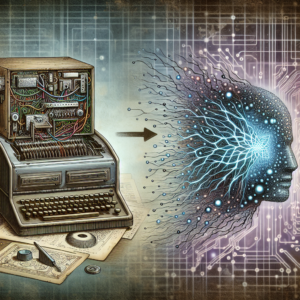

Machine learning is a term that’s become ubiquitous in today’s tech-driven world. From voice assistants like Siri and Alexa to recommendation engines on Netflix and Amazon, machine learning is behind the curtain, making these technologies smarter and more efficient. But what exactly is machine learning, and why is it so important? In this article, we’ll break down the basics to help you understand this transformative field.
What is Machine Learning?
At its core, machine learning is a subset of artificial intelligence (AI) that gives computers the ability to learn from data and make decisions without being explicitly programmed. Think of it as teaching a computer program to recognize patterns and make predictions based on the data it consumes.
The Foundations of Machine Learning
1. Algorithms
Algorithms are the step-by-step procedures or formulas for solving problems. In the context of machine learning, algorithms take data as input and output predictions or decisions. These algorithms can range from simple linear regression models to complex neural networks.
2. Data
Data is the cornerstone of machine learning. The quality and quantity of data directly influence a model’s ability to learn and make accurate predictions. Data can be structured (like spreadsheets) or unstructured (like photos or audio files).
3. Training
Training is the process of feeding data into an algorithm to help it "learn." During training, the algorithm adjusts its parameters to improve accuracy. This phase is crucial for developing models that perform well on previously unseen data.
Types of Machine Learning
Machine learning can be broadly categorized into three types:
1. Supervised Learning
In supervised learning, the algorithm is trained on labeled data, meaning the input comes with the correct output. For instance, if you’re teaching a model to recognize cats in photos, you’d provide images labeled as "cat" or "not cat."
Examples of supervised learning include:
- Linear Regression: Used for predicting continuous values, like house prices.
- Classification: Distinguishing different categories, like spam vs. non-spam emails.
2. Unsupervised Learning
Unlike supervised learning, unsupervised learning works with data that doesn’t come with labels. The goal is to identify patterns or groupings within the data.
Examples include:
- Clustering: Grouping similar data points together, like customer segmentation for marketing.
- Anomaly Detection: Identifying unusual data points, like fraudulent transactions.
3. Reinforcement Learning
Reinforcement learning involves training algorithms through a system of rewards and penalties. It’s akin to training a pet – actions that bring positive results (rewards) are encouraged.
Applications include:
- Game Playing: Algorithms like AlphaGo use reinforcement learning to master board games.
- Robotics: Teaching robots to perform tasks like walking or manipulating objects.
Real-World Applications
Machine learning has a plethora of applications across various sectors:
1. Healthcare
Machine learning models can analyze medical images to detect conditions like tumors at an early stage. They can also predict patient outcomes and personalize treatment plans.
2. Finance
In finance, machine learning helps detect fraudulent transactions, assess credit risk, and automate trading.
3. Retail
Retailers use machine learning for inventory forecasting, personalized recommendations, and optimizing pricing strategies.
4. Transportation
Autonomous vehicles rely on machine learning for object recognition and decision-making on the road.
Challenges in Machine Learning
While machine learning offers vast potential, there are several challenges:
1. Data Quality
Garbage in, garbage out. Poor quality data leads to inaccurate models. Ensuring data is clean, relevant, and unbiased is paramount.
2. Overfitting
Overfitting occurs when a model learns the training data too well, capturing noise instead of the underlying pattern. Such models perform poorly on new data. Techniques like cross-validation and regularization help mitigate overfitting.
3. Interpretability
Complex models, especially deep learning models, often act as black boxes, making it difficult to understand how decisions are made. Efforts are underway to develop more interpretable models to maintain transparency and trust.
Getting Started with Machine Learning
For those interested in diving deeper into machine learning, here are some steps to get started:
1. Learn the Basics
Begin with foundational concepts in statistics and programming. Languages like Python and R are popular in the machine learning community.
2. Online Courses
Platforms like Coursera, edX, and Udacity offer comprehensive machine learning courses from beginner to advanced levels.
3. Hands-On Practice
Practice is key. Use resources like Kaggle to work on real-world datasets and compete in machine learning challenges.
4. Read and Research
Stay updated with the latest trends by following research journals, blogs, and forums related to machine learning.
The Future of Machine Learning
Machine learning is rapidly evolving, with breakthroughs in areas like natural language processing and computer vision. As algorithms become more sophisticated and data sources multiply, machine learning’s impact will only grow.
However, ethical considerations, such as data privacy and algorithmic bias, will remain at the forefront. Balancing innovation with responsibility will be crucial as we forge ahead.
Conclusion
Machine learning is a fascinating field, underpinned by data, algorithms, and mathematical models. While it might seem complex, at its essence, it’s about teaching computers to learn from experience and improve over time. As machine learning continues to transform industries, understanding its principles will be invaluable, making it a vital skill for the future. Whether you’re a tech enthusiast or a curious layperson, now is the perfect time to explore this exciting domain.