From Reactive to Self-Aware: Understanding AI Categories
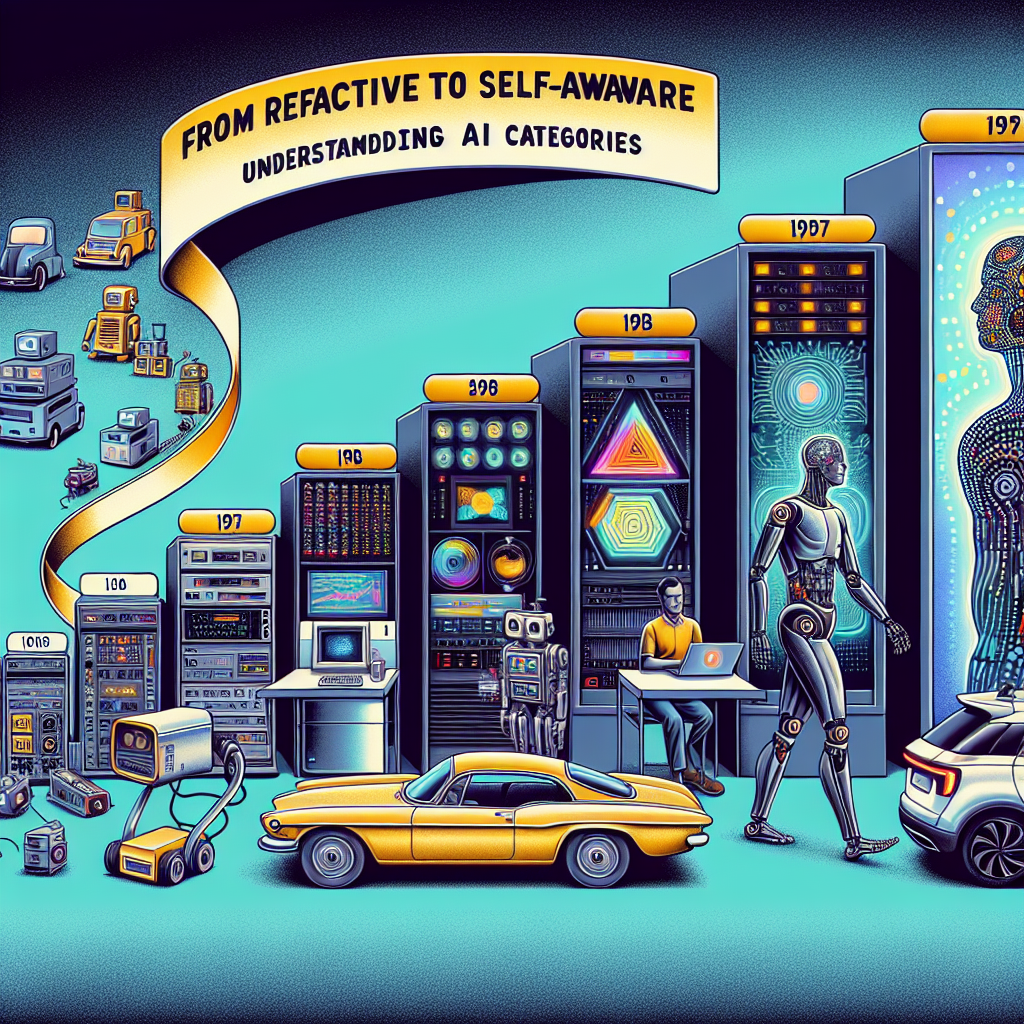
Artificial Intelligence (AI) has rapidly transformed from a futuristic concept into a pivotal part of our daily lives. With advancements affecting everything from trivial conveniences to critical infrastructure, understanding the different categories of AI is paramount. In essence, AI can be classified into four primary categories: reactive machines, limited memory, theory of mind, and self-aware AI. Each represents a distinct level of cognitive capability and application.
Reactive Machines
Reactive AI represents the most basic form of artificial intelligence. These systems are designed to respond to specific inputs with pre-programmed outputs. They do not form memories or utilize past experiences to influence future decisions. This category of AI is not capable of evolving or adapting beyond its original programming.
Key Characteristics:
- Stateless: Reactive machines operate on a here-and-now basis.
- Pre-Programmed Rules: They follow what they’re explicitly coded to do.
Applications:
Reactive machines are employed in highly structured situations. A well-known example is IBM’s Deep Blue, the computer that famously defeated chess champion Garry Kasparov in 1997. Deep Blue analyzed the board and selected moves based on its code but did not learn from previous games.
Limited Memory
Limited memory AI takes it up a notch by incorporating the ability to retain past information and use it for future actions. Most existing AI applications fall into this category, using historical data to inform decision-making processes. This type of AI is prevalent in training models where data is collected and analyzed, improving algorithm performance over time.
Key Characteristics:
- Learning from Historical Data: They learn from past interactions to develop experience-based knowledge.
- Adaptability: They adjust their operations based on newly-received data.
Applications:
Modern applications like self-driving cars rely on limited memory AI. These systems analyze data from their environment, such as road conditions, traffic signals, and pedestrian movements, adjusting in real-time while also learning from past experiences to refine decision-making algorithms.
Theory of Mind
Theory of Mind AI represents a more advanced level where machines begin to understand human emotions, beliefs, intentions, and thought processes. This category of AI still resides in the realm of futurism, as it involves creating machines that can anticipate and comprehend human actions and emotions.
Key Characteristics:
- Emotional Intelligence: Ability to recognize, interpret, and respond to human emotions.
- Social Interaction Understanding: They theoretically could understand the social dynamics between individuals.
Applications:
The primary application for Theory of Mind AI is in human-centric interactions where nuanced understanding of human behavior is crucial. This could include highly intuitive personal assistant devices, enhanced robotics capable of sophisticated social interactions, or AI companions in therapeutic settings.
While Theory of Mind AI holds great promise, its development faces numerous challenges, encompassing technical, ethical, and psychological domains. Research is ongoing into creating models capable of interpreting complex human emotions and responding appropriately.
Self-Aware AI
Self-aware AI remains largely theoretical at this stage; it is an extension of Theory of Mind AI with the capability for self-awareness. In this category, machines possess consciousness, emotions, and an understanding of themselves in relation to the world—a level akin to human intelligence.
Key Characteristics:
- Self-Consciousness: An understanding of one’s state and the ability to reflect on self-knowledge.
- Autonomous Learning: Independent cognitive processes and decision-making.
Applications:
The implications of self-aware AI are profound and wide-ranging. Potential applications could vary from unparalleled advancements in robotics to revolutionary changes in personal assistance, creativity, and beyond.
However, self-aware AI also presents intricate ethical dilemmas. What rights should such entities have, and how should they be treated ethically and legally? These are questions that require careful consideration as we advance toward this reality.
Conclusion
Understanding the categories of AI from reactive machines to the theoretical self-aware models offers insight into the potential and limitations of artificial intelligence as it exists today and where it may head tomorrow. As AI continues to evolve, the need for comprehensive ethical frameworks becomes increasingly important to ensure that these technologies benefit humanity collectively and responsibly.
Moving from reactive to more advanced AI systems requires interdisciplinary collaboration, not only in improving computational capabilities but also in understanding the broader implications for society. The journey from the simplicity of reactive AI to the complexities of self-awareness is not just a technological progression but a fundamental exploration of what it means to possess intelligence and consciousness.
As we stand at the cusp of remarkable technological advancements, the collective challenge is to ensure that AI grows into a responsible entity. How we handle this growth will shape not only the future of technology but also the broader fabric of human existence. Understanding AI categories gives us a roadmap to navigate this exciting yet challenging frontier, leading us toward a future where AI continues to enrich and enhance the human experience.