In the last decade, deep learning has emerged as one of the most transformative technologies in the realm of artificial intelligence (AI). Its applications range from powering voice assistants like Siri and Alexa to enabling autonomous vehicles and revolutionizing healthcare diagnostics. But what exactly is deep learning, and how does it work? This article aims to provide a comprehensive introduction to deep learning for beginners, exploring its fundamental concepts, components, and applications.
Understanding Deep Learning
At its core, deep learning is a subset of machine learning, which itself is a subset of AI. While traditional machine learning algorithms rely on structured data and require feature engineering by data scientists, deep learning models automate this process, making it particularly effective for handling unstructured data such as images, audio, and text.
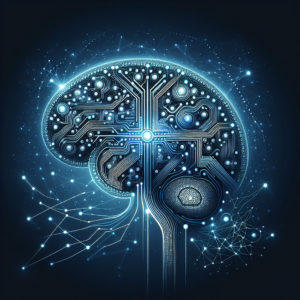
Deep learning is inspired by the structure and function of the human brain, specifically neural networks. It leverages layers of artificial neurons to process data, making it possible for computers to learn and make decisions with minimal human intervention. The term "deep" in deep learning refers to the use of multiple layers in the neural network, allowing the system to learn increasingly abstract features of the data.
The Architecture of Neural Networks
The fundamental building block of deep learning is the artificial neural network (ANN). An ANN consists of three types of layers: the input layer, hidden layers, and the output layer.
-
Input Layer: This is where the network receives the data. Each neuron in this layer represents a feature or attribute of the input data.
-
Hidden Layers: These layers perform transformations on the input data. A deep neural network contains multiple hidden layers, allowing it to learn complex patterns. The more hidden layers in a network, the deeper it is. Each neuron in a hidden layer applies a specific mathematical function to the data, and the output is passed to the next layer.
- Output Layer: This layer produces the final prediction or classification. In a classification task, for instance, the output layer might contain a single neuron (for binary classifications) or multiple neurons (for multi-class classifications).
Training Neural Networks
Training a neural network involves adjusting the weights of the connections between neurons to minimize the difference between the predicted output and the actual target. This process is known as optimization. The most common optimization algorithm used in deep learning is stochastic gradient descent (SGD), often accompanied by techniques like backpropagation to compute gradients efficiently.
During training, the network learns by iteratively updating the weights through epochs, where each epoch represents a complete pass through the entire training dataset. The loss function, a measure of the error in predictions, guides the optimization process. Popular loss functions include mean squared error for regression tasks and cross-entropy loss for classification tasks.
Activation Functions
Activation functions play a crucial role in introducing non-linearity to neural networks, allowing them to solve complex problems. Some widely used activation functions include:
-
Sigmoid: Squashes input values to a range between 0 and 1, commonly used in the output layer for binary classification.
-
ReLU (Rectified Linear Unit): Outputs the input directly if it is positive; otherwise, it outputs zero. ReLU is popular due to its simplicity and effectiveness in hidden layers.
- Tanh: Similar to the sigmoid function but outputs values between -1 and 1, often used in hidden layers for its zero-centered output.
Popular Deep Learning Frameworks
Several frameworks have been developed to facilitate the creation and training of deep learning models. These frameworks provide pre-built components and libraries, making it easier for beginners to get started. Some of the most popular deep learning frameworks include:
-
TensorFlow: Developed by Google, TensorFlow is an open-source library that supports a wide range of tasks, from simple linear regression to complex neural networks.
-
PyTorch: Known for its dynamic computation graph and ease of use, PyTorch is favored by researchers and developers for prototyping and experimentation.
-
Keras: A high-level neural network API written in Python, Keras runs on top of TensorFlow and simplifies the process of building deep learning models.
- Caffe: Developed by the Berkeley Vision and Learning Center, Caffe is particularly well-suited for image classification and convolutional neural networks (CNNs).
Real-World Applications of Deep Learning
Deep learning has permeated various industries, driving innovation and efficiency. Here are some notable applications:
1. Computer Vision
Deep learning has revolutionized computer vision, enabling machines to interpret and understand visual information. Convolutional neural networks (CNNs) are at the forefront of this revolution, powering applications such as facial recognition, object detection, and image classification. For example, CNNs are used in medical imaging to identify anomalies in X-rays and MRIs, assisting doctors in diagnosing diseases more accurately.
2. Natural Language Processing (NLP)
Deep learning has significantly advanced the field of NLP, which focuses on the interaction between computers and human language. Recurrent neural networks (RNNs) and transformers are key architectures used in NLP tasks such as language translation, sentiment analysis, and chatbots. Models like OpenAI’s GPT-3 have demonstrated the ability to generate human-like text, opening new possibilities for content creation and customer service automation.
3. Autonomous Vehicles
Self-driving cars rely heavily on deep learning for perception and decision-making. By processing data from cameras, LiDAR, and other sensors, deep learning models can identify objects, predict their movement, and make driving decisions in real-time. Companies like Tesla and Waymo are at the forefront of developing autonomous vehicle technology, aiming to improve road safety and reduce traffic congestion.
4. Healthcare
In healthcare, deep learning is used to analyze complex datasets, including patient records and genomic data, to personalize treatment plans and predict patient outcomes. Deep learning models have shown promise in detecting diseases like cancer at an early stage, potentially saving lives through timely intervention.
Challenges and Future Directions
Despite its successes, deep learning faces several challenges. One major challenge is the need for large amounts of labeled data for training, which can be time-consuming and expensive to obtain. Additionally, deep learning models are often seen as "black boxes," making it difficult to interpret their decision-making processes.
Researchers are actively working on addressing these challenges by developing techniques for transfer learning, which allows models to leverage knowledge from related tasks, and explainable AI, which aims to make AI systems more transparent and understandable.
Looking ahead, the future of deep learning holds exciting possibilities. As computational power continues to grow and new architectures emerge, deep learning is expected to become even more powerful and versatile, driving advancements in fields like robotics, personalized medicine, and climate modeling.
Conclusion
Deep learning is a fascinating and rapidly evolving field with the potential to transform industries and improve lives. By understanding its fundamental concepts and exploring its applications, beginners can embark on a journey to harness the power of deep learning. As you delve deeper into this exciting domain, remember that experimentation and continuous learning are key to mastering deep learning and unlocking its full potential. Whether you’re a student, a professional, or simply a curious enthusiast, deep learning offers a wealth of opportunities to innovate and make a meaningful impact.